Quick answer
Erg Chegaga from Marrakech requires 7 to 8 hours of driving through the High Atlas, the Draa Valley, and 60 kilometers of trackless desert from M'Hamid El Ghizlane. The dunes are open year-round with free entry, but access depends entirely on private 4x4 hire or organized tour—no public transport reaches the site. Daylight navigation is essential; plan to arrive between 06:00 and 18:00 for safe passage across unmarked sand.
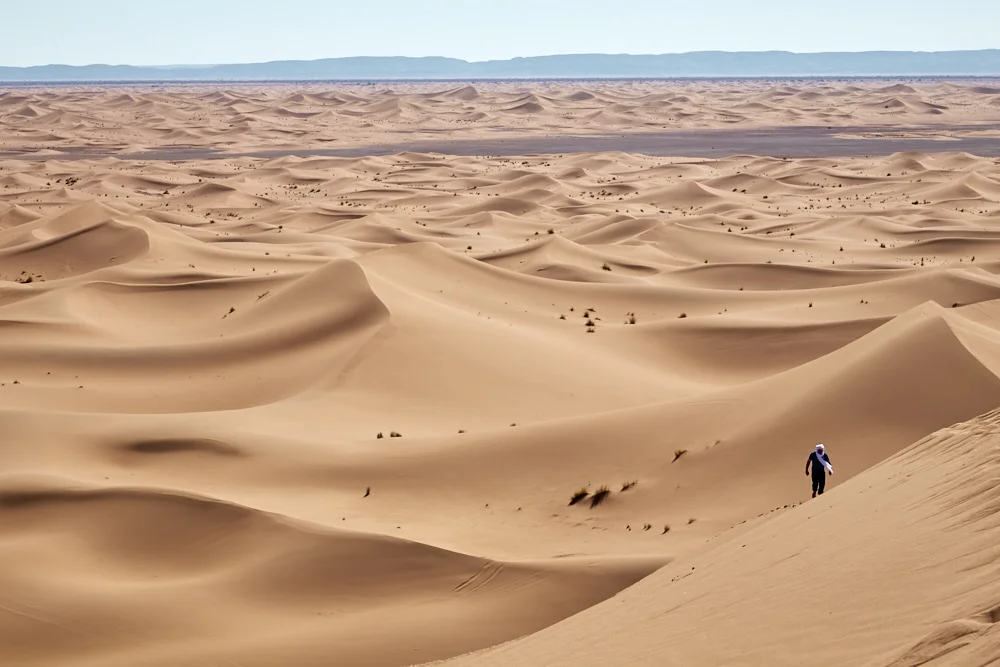
Erg Chegaga holds the distinction of being Morocco's most remote major dune field, a 40-kilometer ribbon of sand that sees a fraction of the visitors drawn to Erg Chebbi near Merzouga. The dunes rise as high as 60 meters in places, sculpted by Saharan winds that leave no permanent track or marker. Reaching erg chegaga from marrakech is a full-day undertaking that begins with the Tizi n'Tichka pass through the High Atlas, continues through Ouarzazate and the Draa Valley palmeries, and ends with a rugged off-road crossing from the last settlement at M'Hamid El Ghizlane. The paved road ends at M'Hamid; beyond lies 60 kilometers of stone plateau, dry riverbed, and open sand that demand 4x4 capability and local knowledge. GPS coordinates help, but drifting sand erases tire tracks within hours, and seasonal flooding can close sections of the approach entirely. Most travelers arrange multi-day tours that include the desert crossing, overnight camp at the dunes, and the return via either the same route or a longer loop through Foum Zguid. Self-drive visitors hire a 4x4 with a local guide in M'Hamid; attempting the crossing alone without desert driving experience is not advised. The terrain shifts from packed reg to soft erg without warning, and recovery equipment is not optional. The dunes themselves are free to access—no gate, no ticket, no park infrastructure. What you bring is what you have. Mobile signal disappears south of M'Hamid, and the nearest fuel, water, and provisions are back in Zagora or M'Hamid itself. The isolation is the attraction, but it demands preparation that casual day-trip planning does not account for. Seasonal timing affects more than comfort. Summer temperatures exceed 45°C, and the sand becomes unmanageable for walking or camp setup during midday. Winter nights drop near freezing, and the occasional rains between November and February can render the dry lake beds impassable. Spring and autumn offer the most forgiving conditions for the journey from Marrakech to erg chegaga, with moderate temperatures and stable ground. The dunes face east, so sunrise delivers the sharpest light and longest shadows across the ridgelines. Most guided camps position themselves to catch that window, then depart by mid-morning to avoid the heat of the return crossing.
“The isolation is the attraction, but it demands preparation that casual day-trip planning does not account for.”
Planning Your Journey to Erg Chegaga From Marrakech
Erg Chegaga is located in the remote desert region near M'Hamid El Ghizlane, approximately 500 kilometers from Marrakech. Access requires traveling across the Atlas Mountains before transitioning to off-road desert tracks.
N9 road from Marrakech to Ouarzazate, then N9 to M'Hamid El Ghizlane
Off-road track from M'Hamid El Ghizlane to Erg Chegaga
Standard Itinerary for Erg Chegaga From Marrakech
Most tours depart Marrakech early and follow a two- or three-day route, allowing time for the Atlas crossing, desert stops, and the final off-road push to the dunes. This itinerary reflects a typical three-day private tour with overnight stays in Ouarzazate and M'Hamid.
Depart Marrakech via Tizi n'Tichka
Cross the High Atlas on the N9, stopping at the 2,260 m pass for views and Berber cooperatives. Arrive in Ouarzazate by early afternoon; visit Aït Benhaddou if time allows before your overnight stop.
Overnight in Ouarzazate
Rest at a hotel or guesthouse in Ouarzazate. Dinner is typically included, and you'll depart early the next morning for the Draa Valley.
Drive through the Draa Valley
Follow the palm-lined valley south through Agdz and Zagora, passing kasbahs and desert villages. Reach M'Hamid El Ghizlane by mid-afternoon, the last paved settlement before the dunes.
Transfer to Erg Chegaga by 4x4
Leave tarmac behind for 60 km of rocky desert track, crossing dry lakes and low dunes. Reach camp before sunset; camel rides and stargazing follow dinner.
Sunrise at the dunes, return north
Watch first light on the highest dunes in Morocco—some reach 300 m. Depart mid-morning, retracing the desert track and taking the faster Iriqui Lake route back toward Foum Zguid and Marrakech.
Best Time and Daylight Windows for Erg Chegaga From Marrakech
The optimal time to visit Erg Chegaga is during the shoulder seasons of spring and autumn to avoid extreme desert temperatures. Regardless of the season, all arrivals must occur within the 06:00–18:00 window to ensure safe navigation across desert terrain.
March to May
ModerateWarm, 20°C to 30°C
Days are pleasant for travel and exploration before summer heat peaks.
September to November
ModerateMild, 15°C to 28°C
Clear skies and comfortable temperatures prevail during these transition months.
June to August
LowVery hot, 35°C to 45°C
High temperatures make mid-day outdoor activities difficult and physically demanding.
December to February
LowCool, 5°C to 20°C
Nights are cold, requiring adequate preparation for sub-zero temperatures.
Verdict: The best time for an Erg Chegaga visit is during the shoulder months of April or October, ensuring arrival within the 06:00–18:00 daylight window.
Entrance Fees for Erg Chegaga From Marrakech
There is no cost for admission to Erg Chegaga itself. Access to this remote desert area is contingent upon arranging private 4x4 transport or guided desert services.
The entry fee is 0 MAD, but travelers must account for the cost of professional 4x4 hire to navigate the desert terrain.
Operational Access Hours for Erg Chegaga From Marrakech
Erg Chegaga is accessible daily, reflecting its status as a remote natural destination. While the dunes themselves are open at all hours, visitor access is governed by local safety and navigation requirements.
| Monday | 00:00–23:59 | Always accessible |
|---|---|---|
| Tuesday | 00:00–23:59 | Always accessible |
| Wednesday | 00:00–23:59 | Always accessible |
| Thursday | 00:00–23:59 | Always accessible |
| Friday | 00:00–23:59 | Always accessible |
| Saturday | 00:00–23:59 | Always accessible |
| Sunday | 00:00–23:59 | Always accessible |
Preparation Checklist for Erg Chegaga From Marrakech
Desert conditions demand specific preparation—pack light but cover essentials for heat, hydration, and navigation safety.
-
Carry 3+ liters of water per person — Dehydration risk is high in extreme heat with no water sources en route.
-
Pack sun protection and lip balm — UV exposure is severe on open dunes; sunburn develops quickly without cover.
-
Bring passport or national ID — Required for checkpoint crossings near the Algerian border zone.
-
Wear closed-toe shoes with ankle support — Sand infiltrates open footwear and uneven terrain increases sprain risk.
-
Confirm tour operator pickup details 24 hours before — Late changes to departure points or timing are common; reconfirm to avoid missed connections.
-
Download offline maps of M'Hamid region — Mobile signal drops beyond M'Hamid; GPS with cached maps ensures navigation backup.
Check availability
Frequently asked questions about erg chegaga from marrakech
Everything you need to know about erg chegaga from marrakech